Begin with its cosmetic role
asambeauty’s hyaluronic-acid guide describes the ingredient as naturally present in skin and able to bind water. In this journal, that story belongs to topical cosmetic hydration and the feel of a skincare routine. It should not be confused with injectable procedures or their effects. A familiar ingredient name offers a starting point for reading a label, but it does not describe everything a finished product can do.
Choose where the product will fit
The official guide presents serums, creams, masks and ampoules as available formats. It places a serum after cleansing and describes day and night creams as everyday moisturizing steps. Start with the gap you actually want to address. If your current cream already gives you a comfortable finish, a hyaluronic serum may be optional; having the same ingredient in several formats is not a requirement to use all of them.
A serum and a cream are not duplicates
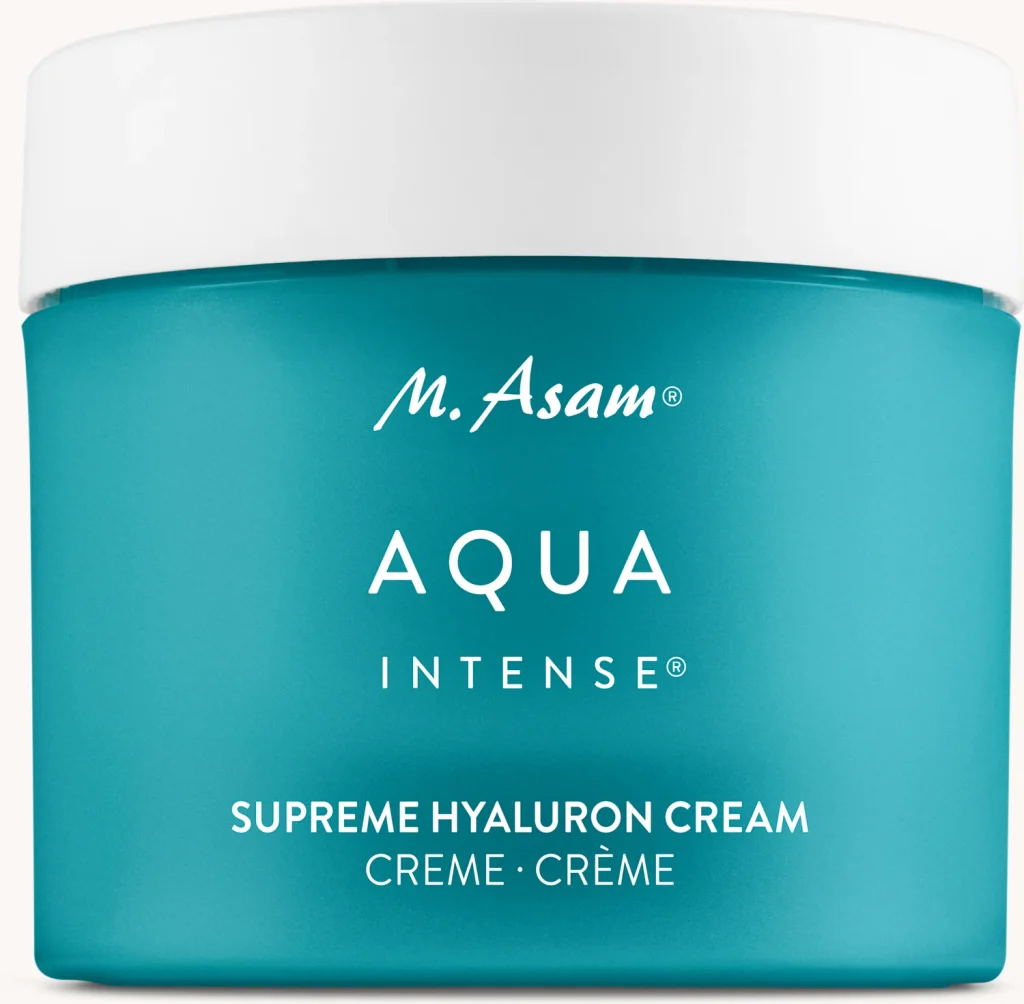
Compare the complete formulas and directions rather than ranking products by how prominently hyaluronic acid appears in their names. The AQUA INTENSE Supreme cream, for example, also highlights urea and shea butter. A serum may occupy another place in the sequence, while a cream brings a different texture and supporting ingredients. Neither format automatically wins: the useful choice is the one that works with your existing routine and preferred finish.
Keep technology claims attached to their source
Some specific products describe different forms of hyaluronic acid and a particular delivery complex. Those details cannot be assigned to every item in the ingredient category. A general guide does not establish one concentration, molecular size or penetration result for the whole range. Likewise, a number drawn from a complex study should not become a promise that your skin will respond identically to every cream carrying the ingredient’s name.
Use extra formats with a purpose
A mask or ampoule can be a separate occasional step if its directions and texture suit you. Our editorial suggestion is to introduce one change at a time and judge whether it adds something useful, rather than stacking products simply to multiply ingredient mentions. Follow each label for application and removal. More layers can make a routine harder to assess, particularly when the surrounding skincare or makeup is also new.
Remember the rest of the label
Hyaluronic acid does not make a product fragrance-free, suitable for every sensitivity or protective against sunlight. Read the full ingredient list and look for a separately stated SPF where sun protection is intended. Stop using a product that feels uncomfortable and use the current package as the reference when formulas change. The practical goal is a comfortable, repeatable cosmetic routine, rather than the largest possible collection of hyaluronic products.
Sources & further reading
- asambeauty official source — Hyaluronic acid: choose a format, not a longer routine (1)
- asambeauty official source — Hyaluronic acid: choose a format, not a longer routine (2)
Product details and formulas can change. Check the official sources and your packaging for current ingredients, shades and directions. Application suggestions are editorial ideas, not guaranteed results.